Sheetrock and drywall patching across Willacy County
Drywall Repair in Raymondville, TX
Storm-soaked ceilings, AC drip stains, settling cracks and dented corners, repaired flush and texture-matched so the patch sits level with the rest of the wall.
Calls are passed to a Willacy County drywall contractor, and the two of you agree on a price before any cutting.
Call 7 days, 7am–9pm · Text us a photo
Four kinds of wall and ceiling work
Every line here opens onto a fuller page: what usually starts the damage, how a careful fix is sequenced, and the warning signs worth watching once it's done.
Ceilings soaked by storm leaks
Sodden board trimmed out joist to joist, the cavity dried, and a new section hung, taped and textured to the ceiling's own pattern.
Drywall wrecked by a dripping AC drain
Tide lines, blistered paint and mushy board left behind by a clogged AC condensate drain or a corroded drip pan, rebuilt once the dripping has stopped.
Settling cracks at doors, windows and seams
Angled splits off door heads and window corners, plus seams that have parted, reinforced with tape rather than smeared shut.
Holes, patches and texture matching
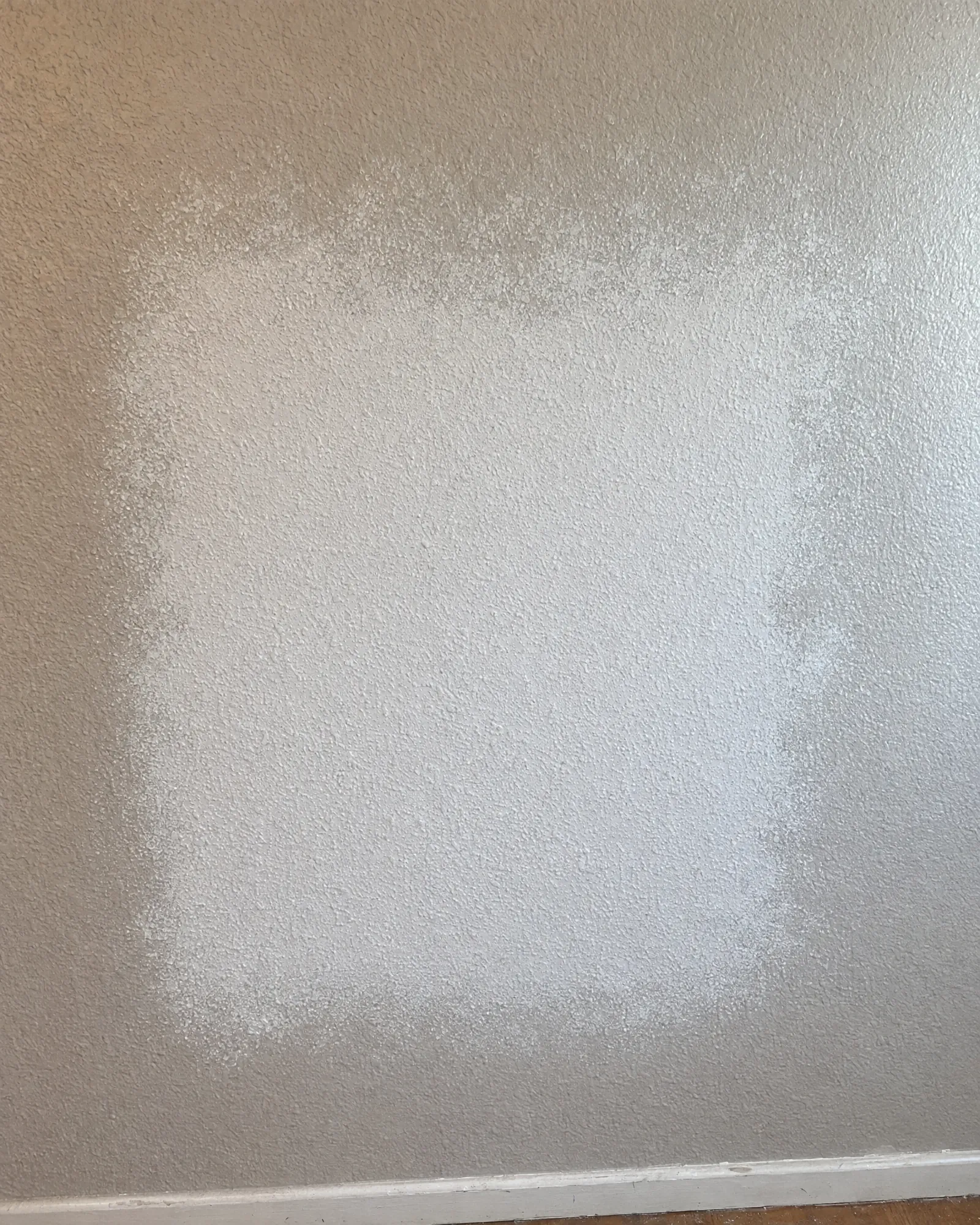
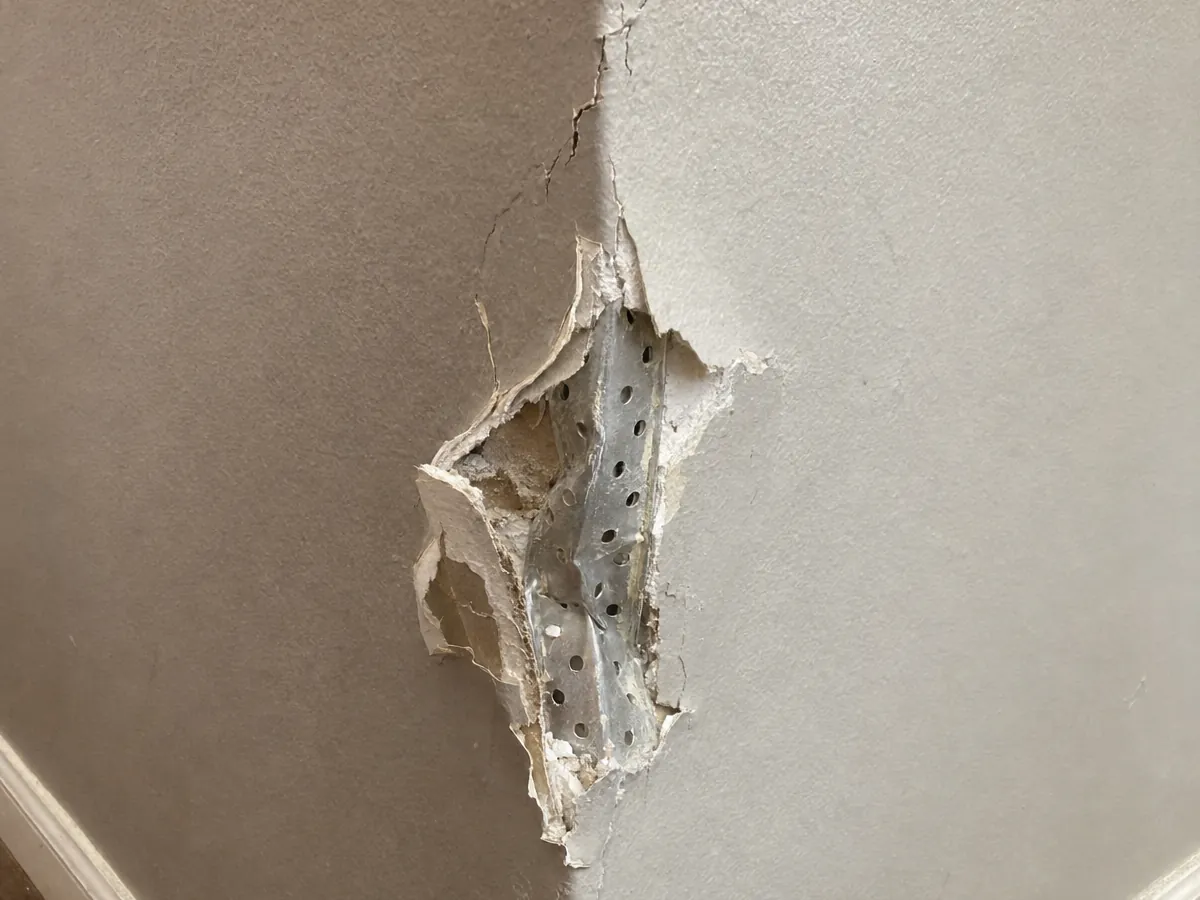
Knob-shaped punctures, screw-anchor holes and crushed corner bead closed up flush, then sprayed or troweled to copy the wall's existing finish.
When Raymondville's housing was framed
Raymondville had 3,191 homes in American Community Survey estimates covering 2020–2024. More of them were built in the 1980s than in any other single decade (568), while 1,252 predate 1970, and nearly every one of those comes from the 1940s, 1950s or 1960s. Behind the paint in that older group you can find plaster, an early gypsum panel, or a patchwork of both from remodels, and each one accepts a patch on its own terms.
Detached single-family houses make up 2,299 of those homes; 605 more are mobile homes. Factory-built walls are sometimes thin prefinished panels, vinyl-skinned and joined under battens, instead of half-inch sheets with taped joints. Fixing one starts by establishing which kind of panel you have.
Of the 2,573 occupied homes in town, renters live in 779. That makes end-of-lease repair a real concern for landlords and tenants alike: picture-hanger pinholes, knob-shaped dents, chipped corners, now and then a ragged opening where a door was flung back too hard, and all of it deserves the same texture as the room around it.
| Built | Homes |
|---|---|
| 1939 or earlier | 29 |
| 1940s | 332 |
| 1950s | 424 |
| 1960s | 467 |
| 1970s | 311 |
| 1980s | 568 |
| 1990s | 362 |
| 2000s | 281 |
| 2010s | 417 |
| 2020 or later | 0 |
| All homes | 3,191 |
Raymondville wall worries, answered
- Can a spray texture really be copied on a small repair?
- That is what the last coat is for. Orange peel, knockdown and a smooth finish each call for their own technique, and a careful hand tests the mix on scrap board, then holds it up to the wall under the room's usual lighting. Paint buildup softens old texture and makes it harder to mimic, and you'll hear honestly if feathering across the whole wall would look better than a spot repair.
- One knob hole: worth a call?
- It is. One knob hole or a cluster of anchor holes is routine. Write down every other blemish around the house before you ring; bundling them into a single trip tends to bring the cost of each one down.
- Does fresh paint reveal where the drywall was patched?
- A mismatched texture, or paint rolled straight onto bare mud, is what makes a repair stand out. A coat of primer on the repair, then paint carried from one corner of the wall to the other, keeps the sheen uniform, and done in that sequence the repair blends in far better.
- Roughly how many days should a repair take?
- Mostly it is cure time, not labor. Each coat of joint compound must set up fully, and muggy summer air drags that out. A modest patch can need two brief sessions; a ceiling bay after a roof leak may stretch over several days once the drying is included.
- Will there be dust everywhere?
- Sanding produces a talc-fine dust, so the floor gets covered and the doorway sealed first, and the last smoothing is often done wet, or with a sander that pulls its dust into a vac. The dust section below lists what to ask about.
- What makes one repair cost more than another?
- Square footage, the count of separate repairs, any soaked board that has to go, ceiling height, the finish being reproduced, and paint or no paint. A Valley drywall pro gives you the figure ahead of time, working from your description and pictures.
Stain, split or pop: tracing the cause
A coffee-brown blotch on the ceiling
Water arriving from above, most often lifted flashing after a downpour or the drip pan beneath an attic air handler. storm leak repairs
Discoloration low on the wall next to the indoor unit
A condensate line backed up, and water wicked from the floor along the bottom plate into the gypsum. condensate damage repairs
A slanting split leaving a door or window corner
The frame has shifted as clay under the slab dried out or swelled; the corner of an opening is where the strain collects. fixing cracks that come back
A row of round bumps at fastener spacing
Nails backing out as the studs dry and settle. Each one gets swapped for a screw, spotted and re-textured. patch and texture work
Tape blistering along a joint
Moisture crept under the tape, or it was set in a skimpy bed of mud when the house was built. The loose length is sliced out and replaced. seam and crack repair
A ceiling dipping between the joists
Gypsum that has soaked up water or pulled off its nails. Switch off the circuit to the overhead light and fan there first, and keep the household clear of the spot below. sagging ceiling repair
Board, mud and the finish on top
Panel thickness
Interior walls are mostly half-inch gypsum; ceilings often get a half-inch sag-resistant sheet or five-eighths. A replacement piece should match whatever is in place, so it lands flush and the coats over it can stay thin.
Setting and drying muds
Powder compound mixed with water sets by a chemical cure, which makes it right for deep fills and bedding tape. Ready-mixed all-purpose and lightweight topping harden as the water evaporates and feather out more easily on the last coats. Damp Gulf air slows evaporation, and a coat hurried along will telegraph later.
Spatter, splat and hand-troweled arcs
Orange peel is a fine, even spatter from a hopper gun. Knockdown begins as heavier blobs that a broad knife skims flat once they firm up. Skip trowel is swept on with a trowel in loose, overlapping crescents. A smooth wall hides nothing and needs a dead-level skim.
Getting the copy right
Three variables decide whether new texture disappears: blob size, how firmly it is knocked down, and the wait between spraying and knocking. Trial passes on cardboard are compared to the wall before the patch sees any.
Phone call, figure, date, mud, primer
Words and a picture
Ring, write a few lines on the form, or send a phone photo with something for size in the shot. Mention what caused it, if that is known.
A figure agreed
A Valley drywall pro rings you, talks through the damage and your photos, and quotes the job. No work is scheduled without your yes.
A date on the calendar
We set a day that fits your week and let you know what to move away from the wall.
Board, tape, mud, pattern
Damaged gypsum is trimmed back until what remains is firm, a new piece goes in flush, then tape and thin coats of compound follow, each allowed to cure before the texture is copied.
Primer on, room returned
Primer seals the repair and the space is left paint-ready, or fully painted when that was agreed.
Sheeting, drop cloths and covered returns
Underfoot
Canvas or poly runs from the baseboard out beyond where anybody will stand, its edges taped down so it stays put. Carpet calls for a thicker cover than tile does.
Openings and air grilles
A plastic wall with a zippered flap seals the doorway. Any supply or return grille in the room gets masked as well, because with air conditioning working hard through a Raymondville summer, an uncovered return pulls sanding dust into every room.
Chairs, beds and shelves
Before the day, lift down anything small or breakable along that wall. Heavier pieces get pushed toward the center and draped.
The final sanding pass
Ask if that last pass will use a dust-extracting sander or a wet sponge. Either one keeps far less powder in the air than dry hand sanding, and wiping the sills with a damp rag afterward picks up what's left.
After a Gulf storm, take the pictures first
Shots worth having
Start with the whole room, then move in close on each stain with a tape laid across it for scale. Photograph the ceiling straight up from beneath, plus any soaked insulation or drip you can safely spot through the attic hatch.
Notes worth keeping
Jot down when the water first appeared, what the weather was doing, when the dripping quit, and what you moved or shut off. Notes jotted while it is fresh hold up better than recollections weeks on.
If you rent
Email or message the landlord or manager with the photos and notes, and keep your own copy. A dated, written message leaves a clearer trail than a phone call.
If you own
Your insurance company will say what it needs, and coverage is a matter between you and your policy. Having records from day one just makes that exchange simpler.
Why a patch glows under fresh paint
Dull spots and shiny halos
Raw joint compound soaks up paint unevenly next to an already-painted surface, so an unprimed patch cures flatter or glossier and jumps out when sunlight skims the wall.
The right primer
Ordinary drywall primer seals new mud. Over a water mark, a stain blocker (shellac or alkyd based) is used instead, formulated to keep the brown outline from bleeding into the finish coat.
Flat, eggshell or satin
Flat paint hides minor differences. Eggshell and satin reveal every edge, so on those finishes it pays to roll the full wall instead of dabbing at the square.
The brush at the end
Certain repairs end at primer and the painting is yours; others carry through to the topcoat. Say which you'd prefer on the phone so it shows up in the figure, and hang on to the old can or a flake of the color for matching.
Raymondville ceilings, between attic heat and storm water
Brown outlines above you
A stain above your head nearly always leads to the roof or to an attic unit's drain pan. Once the source is repaired, the gypsum is pressed for soft spots and the ring sealed ahead of paint.
A belly in the ceiling
Power comes first: trip the breakers for the overhead lights and fan around the sag. After that, nobody stands or sleeps under it. Soaked gypsum carrying trapped water is liable to drop all at once.
Seasonal gap at the ceiling line
A split at the junction of a partition wall and the ceiling, wider in winter and tighter in summer, usually points to trusses lifting. More tape seldom solves it; the right repair lets that corner float free.
Popcorn
Pre-1980s acoustic popcorn is a known asbestos suspect, so nobody should scrape it until a lab has checked a chip. Small damage can often be resprayed to blend without touching the rest.
Lines along the joints
Faint stripes tracing the taped joints across a ceiling usually mean the tape went on over too little mud. A broad skim across the joint flattens it.
Plaster, thin early board and decades of settling complicate things in pre-1970 houses. Read the guide on walls in Raymondville's older homes.
A few lines about your wall or ceiling
Two or three sentences about the damage and the room will do. Pictures help, and they can be texted to this same number.
Give us a ringOnce you ring or write, a drywall contractor in Willacy County returns the call and puts numbers to the fix.
(956) 449-0080
Call 7 days, 7am–9pm
Text us a photo of the damage if that is easier.
Whatever you type lands with a Valley drywall contractor; expect a callback that walks through the damage and names a figure.